-
Task
-
Resolution: Unresolved
-
 Normal
-
None
-
None
-
Quality / Stability / Reliability
-
False
-
-
False
-
None
-
Unset
-
None
-
-
Audit the codebase for silent error handling (empty catch blocks, swallowed errors) and establish a consistent error logging strategy using Sentry/GlitchTip.
Why
- Silent failures hide bugs and make debugging difficult
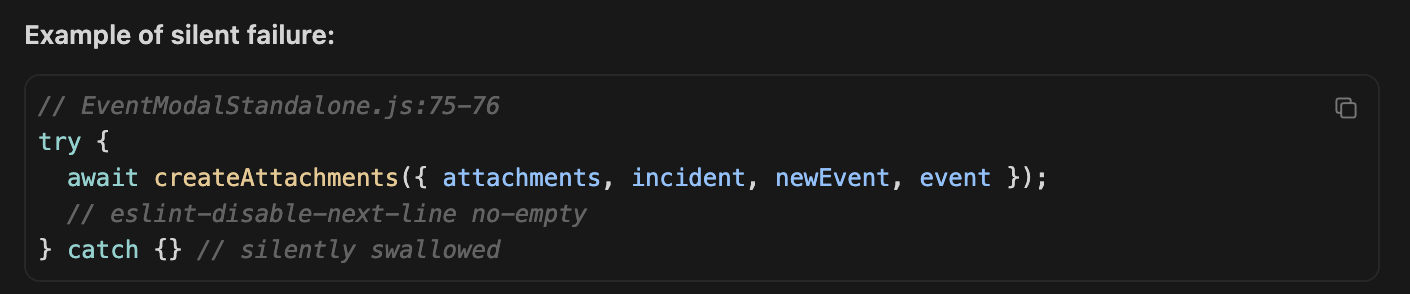
- Empty catch blocks violate ESLint rules (requires disable comment)
- No visibility into production errors without logging
- Sentry/GlitchTip integration already exists but may be underutilized
- Errors should be logged for observability, even if UI gracefully handles them
Context
Example of silent failure (attached)
Sentry/GlitchTip is already configured:
- src/shared/sentry.js — integration exists
- Stage DSN: glitchtip.devshift.net/41
- Prod DSN: glitchtip.devshift.net/42
Acceptance Criteria
- [ ] Audit codebase for empty catch blocks and silent error handling patterns:
-
- [ ] Empty catch {} blocks
-
- [ ] catch (e) { /* ignored */ }
-
- [ ] .catch(() => {}) promise handlers
- [ ] Document each instance with file, line number, and context
- [ ] Categorize errors by severity (critical vs. recoverable)
- [ ] Evaluate current Sentry/GlitchTip helper utilities in src/shared/sentry.js
- [ ] Determine if additional helper functions are needed (e.g., captureException wrapper)
- [ ] Define error logging conventions:
-
- [ ] What context/metadata to include
-
- [ ] When to log vs. when to rethrow
-
- [ ] Error grouping strategy
- [ ] Verify GlitchTip is receiving errors (check dashboard access)
- [ ] Produce implementation tickets with effort estimates
- [ ] Document recommended error handling patterns for developers